Four Towns Merged to Make North Myrtle Beach. The Housing Market Never Got the Memo.
September 24, 2026
September 24, 2026
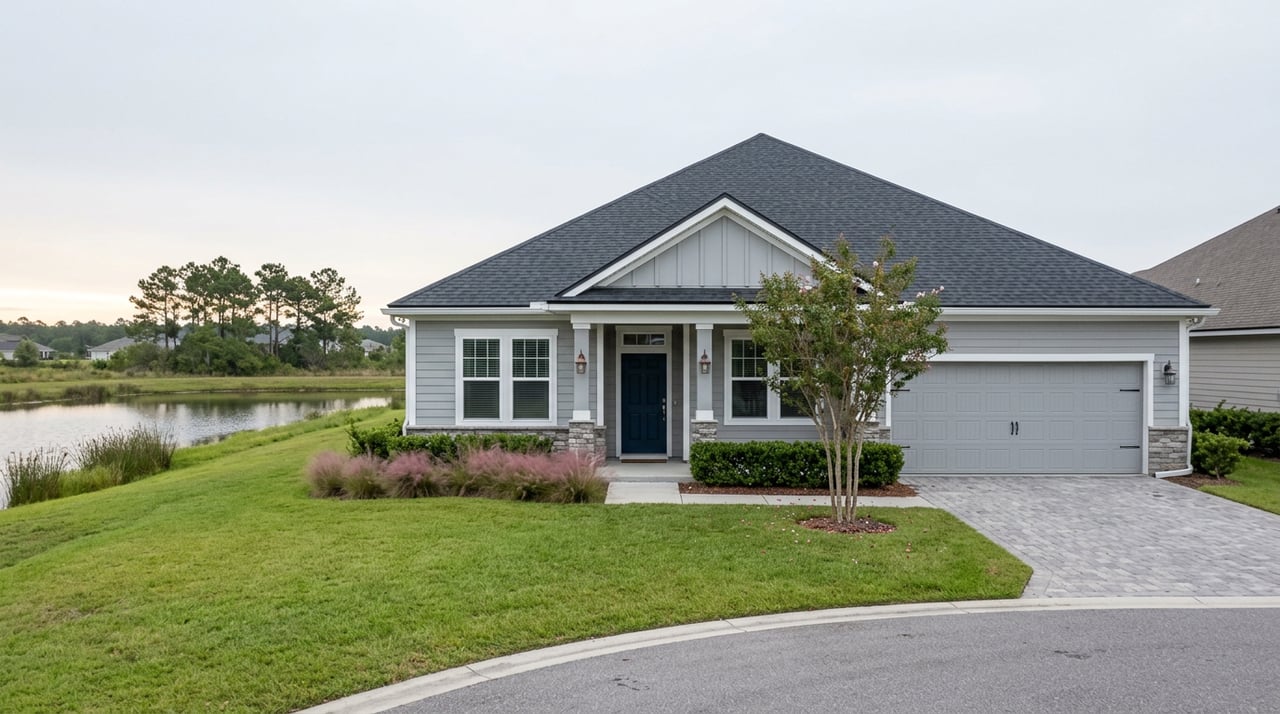
Pull up two active listings tagged "North Myrtle Beach" on the same afternoon and you might see a canal-front cottage near Cherry Grove Pier asking well into the $500,000s sitting next to a two-bedroom condo a few miles south asking under $250,000. Same city. Same zip code family. Same generic label on the listing sheet. The gap between them has almost nothing to do with square footage or finishes.
It has to do with the fact that North Myrtle Beach isn't one town pretending to be one town. It's four.
Cherry Grove, Ocean Drive, Crescent Beach and Windy Hill were each their own incorporated municipality until 1968, when they merged into a single city. That merger was a political and administrative decision. It was never an economic one. Each of the four sections still elects its own representative to a dedicated city council ward, and residents can tell which historic town they're standing in by the color of the street signs, a detail the Horry County Historical Society's local history column still points to as one of the clearest markers of the old boundaries.
That distinction matters for a house hunter for a reason that has nothing to do with nostalgia. Each of those four towns was built around a different economic purpose long before anyone was comparing school districts or commute times. Cherry Grove was laid out as a residential retreat. Ocean Drive grew up around nightlife and beach music. Windy Hill formed around a commercial waterway corridor. Those original functions never fully disappeared, and they still show up in what a buyer's dollar actually gets today.
Cherry Grove is the northernmost of the four, and it's the one locals describe as the quiet end of the strand. Once you cross Sea Mountain Highway heading north, the commercial buildings stop entirely. What's left is beach houses, condos and the canal system that laces through the neighborhood, plus Cherry Grove Pier, where a world-record tiger shark was reportedly reeled in back in 1964. The town has never added the kind of dense retail strip you'll find elsewhere in the city, and that lack of commercial density is part of why Cherry Grove carries some of the highest price premiums of the original four towns. As of September 2026, one local brokerage's active listing feed also showed it as the section currently driving the most buyer demand across all of North Myrtle Beach.
Ocean Drive sits at the historic center of the city and carries a very different identity. It's considered the birthplace of the Shag, the dance that grew out of the beach music scene here in the 1940s and is now South Carolina's official state dance. Main Street runs through the heart of it with restaurants and boutique shops, and the town is also home to the North Myrtle Beach Historical Museum, one of the civic anchors still tied to the old Ocean Drive boundary. The nightlife economy that built Ocean Drive still shows up in prices closest to the core. But move a block or two off the beach and the picture changes. As of spring 2026, local market data showed interior streets in Ocean Drive, along with the Windy Hill area, offering some of the most accessible single-family pricing in the entire city. Same historic town, two very different markets depending on which side of a single street you're standing on.
Crescent Beach sits between the two, both geographically and in character. It's home to Azalea Sands Golf Club and older resort properties like Seaside Resort, mixed in with quiet residential blocks. It doesn't carry the premium of Cherry Grove or the affordability of Windy Hill. It's the town most likely to get overlooked in a citywide average, because it doesn't pull the number in either direction as hard as its neighbors.
Windy Hill anchors the southern end and functions almost like a different economic engine entirely. It grew up around the Intracoastal Waterway and now serves as the gateway to Barefoot Landing, the waterfront boardwalk of shops and restaurants that's also home to the House of Blues and the Alabama Theatre. That commercial corridor, plus Windy Hill's greater distance from the immediate beachfront, keeps entry pricing lower here than anywhere else in the original four towns. As of spring 2026, one local market breakdown put Windy Hill home prices in a range of roughly $250,000 to $550,000, with condo entry points near $200,000 and single-family homes starting around $300,000. Rental inventory was also deepest here at that time, with one-bedroom units typically running $1,200 to $1,600 a month and two-bedrooms $1,500 to $2,000, which makes Windy Hill a common landing spot for people relocating who want to live in the area for a few months before they buy.
Layered on top of the four historic towns is a newer category that didn't exist when the merger happened: gated golf and resort communities built inside North Myrtle Beach's borders but priced almost independently of the town they sit in. Barefoot Resort, straddling the Intracoastal Waterway near Windy Hill, and Tidewater Plantation, tucked into the Cherry Grove section, both operate as their own amenity-driven ecosystems with private marinas, championship golf courses and clubhouse access.
As of early September 2026, Barefoot Resort's condo inventory carried a median listing price around $320,000 across more than 100 active units, with homes typically spending about 95 days on market. That places it above Windy Hill's condo entry point but below the premium end of Cherry Grove, functioning as a genuine middle tier: resort amenities at a price that isn't quite luxury and isn't quite entry-level. Barefoot Resort's single-family side runs considerably higher, with current gated golf-course estates listed as high as $1.55 million. A few miles north, inside the Cherry Grove section, Tidewater Plantation's current listings span roughly $305,000 for a golf-course homesite up to around $880,000 for a waterway estate on the Tidewater Golf Club course, its own spread layered on top of Cherry Grove's already elevated base.
This is where the math gets interesting for anyone reading a single median price and assuming it describes a coherent market. Over the three months ending in July 2026, the median sale price across all of North Myrtle Beach was $412,000, down 4.8 percent from the same period a year earlier, with homes selling in an average of 100 days compared to 104 the year before. At the same time, as of September 2026, one local brokerage's active listing feed showed a median list price of $435,000 across its current inventory, more than $20,000 higher than the sold median, and attributed the bulk of that demand specifically to Cherry Grove beach houses.
Read those two numbers side by side and the four-town structure explains what a single citywide figure never could. Listings are skewing toward Cherry Grove's premium end because that's where sellers and buyer interest are concentrated. But closings are landing lower, which suggests a meaningful share of actual sales are happening in Windy Hill, interior Ocean Drive and the more accessible pockets of the resort layer. The city isn't getting cheaper or more expensive as a whole. It's that the mix of where deals are actually closing keeps shifting between towns with very different price floors.
That volume also grew even as the median cooled. There were 603 homes sold in North Myrtle Beach in July 2026, up from 491 in July 2025. A falling median alongside rising sales volume is exactly what you'd expect if more of that activity were happening in the more affordable towns rather than a citywide slowdown.
For anyone relocating from outside the region, that mix matters even more. During the first quarter of 2026, roughly six in ten North Myrtle Beach home shoppers were searching to stay within the local metro area, while out-of-market interest was led by buyers searching from Washington D.C., New York and Boston. Those buyers are typically comparing North Myrtle Beach against much higher-cost markets, which makes the spread between a Windy Hill condo and a Cherry Grove cottage look small on paper. It isn't small once you're actually deciding where to live.
If a listing simply says "North Myrtle Beach," that label alone won't tell you which of these five markets you're standing in. The town, the block within the town, and whether the property sits inside a gated resort layer will tell you more about the price than the citywide median ever will. Before comparing two listings on price alone, it's worth asking which of the four founding towns each one sits in, and whether either falls inside a resort community like Barefoot Resort or Tidewater Plantation that prices on its own terms.
FAQ
Is Cherry Grove automatically the most expensive part of North Myrtle Beach because it's closest to the beach? Beach proximity is part of it, but the bigger driver is that Cherry Grove never developed the commercial density the other towns did. Fewer commercial buildings and more canal and marsh frontage have kept it a premium residential area rather than a purely beachfront pricing story.
Do Barefoot Resort and Tidewater Plantation count as part of Windy Hill or Cherry Grove, or are they their own thing? Geographically they sit inside those towns, Barefoot Resort near Windy Hill and Tidewater Plantation in the Cherry Grove section, but they price as their own amenity-driven communities rather than tracking the surrounding town's typical range.
Where would someone relocating find the most rental inventory to live in before buying? Windy Hill and the area around Barefoot Landing currently carry the deepest rental supply in the city, which makes that stretch a common starting point for people who want to spend a season in North Myrtle Beach before committing to a purchase.
Figuring out which of these towns actually fits your budget and your reasons for moving takes more than a citywide number. If you want a walkthrough of what a specific price point buys in Cherry Grove versus Windy Hill versus the resort layer, Nick Paolozzi at Life in Myrtle Beach can talk you through it street by street. Start Your Life at the Beach.
Stay up to date on the latest real estate trends.
Whether you’re buying your first home, selling a property, or exploring Myrtle Beach living, we’re here to make the process seamless. With local expertise and a people-first approach, we’ll guide you every step of the way.